




Investing in Iraq 2026: Opportunities, Risks and Strategic Considerations for International Infrastructure Companies

Introduction
Iraq in mid-2026 offers a paradox. The country has the world’s 5th-largest proven oil reserves and a population exceeding 40 million in need of virtually every category of modern infrastructure. It has just emerged from a war that cut oil exports from an average of 93 million barrels to 10 million barrels in a single month. Its government—formed in May—remains incomplete, with interior and defence portfolios still unfilled.
For international infrastructure executives, the question is not whether Iraq offers opportunity—it self-evidently does—but whether the opportunity is worth the risk, and under what conditions. This paper examines five strategic shifts reshaping Iraq’s investment environment, assesses where opportunities are emerging, and identifies the risks that investors must understand.
Strategic Shifts Reshaping Iraq’s Investment Environment
The US Re-emerges as the Anchor Investor
Prime Minister Ali Al-Zaidi departed for Washington on 13 July 2026 leading a high-level delegation. The agenda includes expanding cooperation in Iraq’s oil and gas sector, accelerating investment in associated gas projects, and increasing the participation of US energy companies. A joint Energy and Development Fund is under discussion, under which a portion of Iraq’s oil revenues would finance strategic infrastructure projects.¹
This represents a strategic choice that has not been made so explicitly since 2003. The previous government maintained a more balanced approach, engaging Chinese and Gulf investors alongside Western firms. The Al-Zaidi administration has tilted decisively toward Washington.
The significance for international firms is straightforward: American companies will find doors opening more quickly. European firms with strong US partnerships will also benefit. Firms from other jurisdictions should expect a more competitive landscape. Joint ventures with US-headquartered firms may become a practical necessity for accessing certain opportunities.²
The GGIP Demonstrates Both Ambition and Fragility
The TotalEnergies Gas Growth Integrated Project remains the signature foreign investment in Iraq. Valued at $27bn, it comprises the Common Seawater Supply Project, the Ratawi gas processing complex, a 1GW solar project, and the Ratawi field development. Phase one is worth approximately $10bn.³
But the GGIP also illustrates the fragility of Iraq’s project finance model. In May 2026, MEED reported that Basra Oil Company—which holds a 30% stake—had informed its partners that it is facing liquidity problems due to the Strait of Hormuz disruption and could default on payments within four to six months.⁴ TotalEnergies has maintained a team of 20 staff in Basra supervising progress, with around 5,000 workers on the ground.⁵ The payment issue remains unresolved.
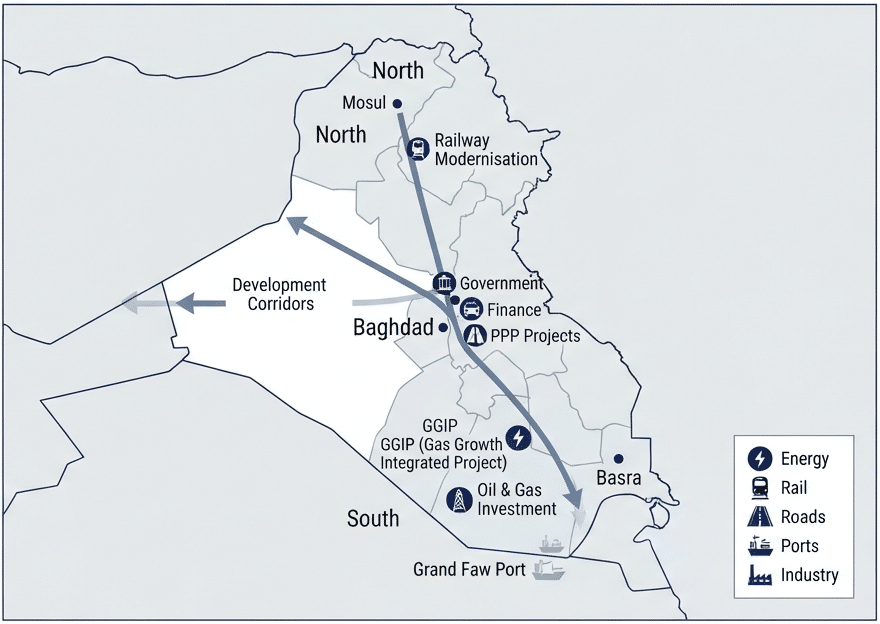
Figure 1: Iraq Investment Environment 2026
Source: Figure developed by the author using generative AI as a visualisation tool. Content, selection, and editorial review by the author.
The lesson is not that Iraq cannot attract tier-one partners. It can. The lesson is that payment risk is real and concentrated. The default risk of a state-owned partner is not theoretical—it can materialise within months. Firms should structure contracts with robust payment security mechanisms and assess whether their risk tolerance can accommodate exposure to counterparties whose revenue streams are hostage to geopolitical events.
The Infrastructure Pipeline Is Being Redrawn
The new government has made clear that not all projects inherited from the previous administration will proceed. In June 2026, Prime Minister Al-Zaidi cancelled the Development Road railway project and the Baghdad International Airport redevelopment.⁶
The airport contract—valued at $764m, awarded in October 2025 to a consortium led by Corporación América Airports, with the IFC as lead advisor—was terminated over corruption allegations.⁷ The railway project was cancelled primarily due to prohibitive costs, deemed financially unsustainable for the state budget.⁸
The cancellations raise significant questions about policy continuity. The IFC, contacted by OCCRP after the cancellation, stated that it remains committed to fostering economic development in Iraq.⁹ But for international investors, the signal is clear: contracts signed under the previous administration are not sacrosanct.
Not all transport projects have been halted. The World Bank approved a $900m financing package in June 2026 for the Iraq Transport Economic Corridors project, focusing on a north-south corridor linking Baghdad to the Turkish border and an east-west corridor connecting Baghdad with Syria and Jordan.¹⁰ The Iraq Railways Extension and Modernization Project—a $1bn project to upgrade the Umm Qasr–Mosul line—remains active and is expected to proceed.¹¹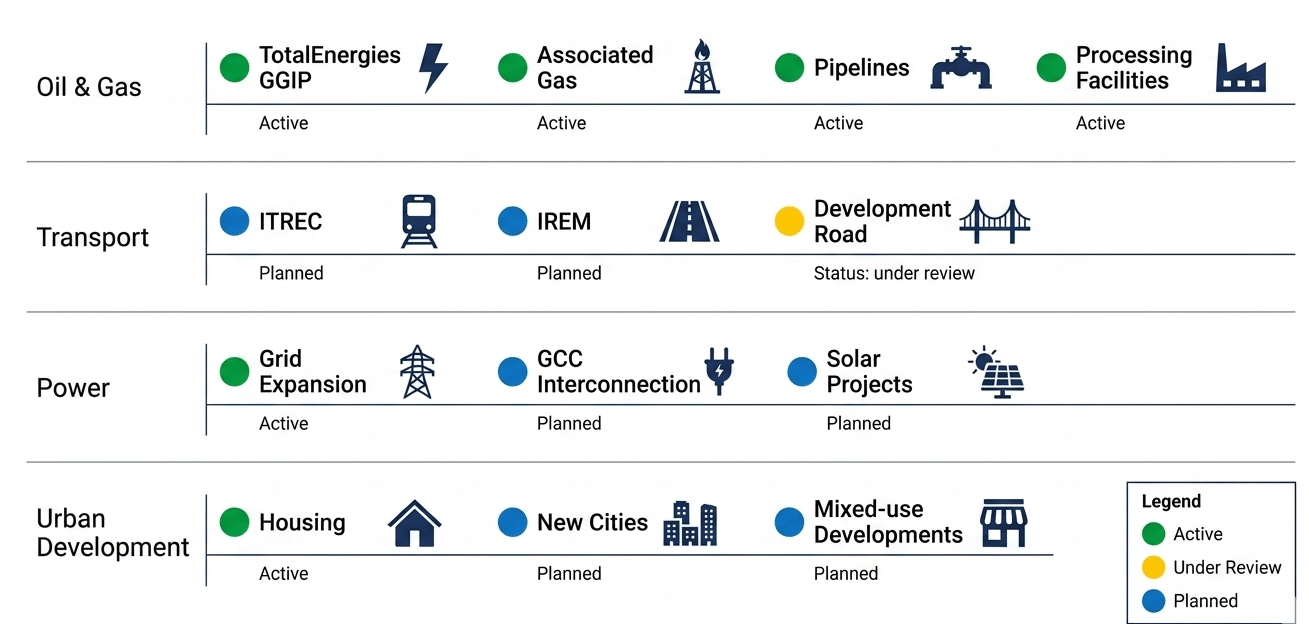
Figure 2. Major Infrastructure Opportunities
Source: Figure developed by the author using generative AI as a visualisation tool. Content, selection, and editorial review by the author.
For international firms, the airport cancellation may prove to be a one-off signal of the new government’s anti-corruption credentials, or it may be the first of many reviews. Either way, it introduces a layer of uncertainty that must be priced into any bid. The projects that survive will likely have strong multilateral backing and clear strategic justification.
The Banking System Is a Binding Constraint
As of February 2026, the Central Bank of Iraq had restricted over 28 banks and 70 exchange companies from USD transactions.¹² The CBI has published lists of institutions prohibited from participating in the foreign exchange trading window and from dealing in US dollars.¹³
These restrictions reflect a systemic problem with money laundering and sanctions compliance that has drawn sustained US Treasury attention. The CBI has since announced measures for the gradual reintegration of some restricted banks, but the underlying issues remain.
Payment flows—whether for construction services, equipment imports, or joint venture contributions—depend on the ability to move money in and out of the country in US dollars. The restrictions are not temporary technical issues. Firms should structure payment mechanisms that minimise exposure to the local banking system—through offshore accounts, direct correspondent banking arrangements, or payment security mechanisms that bypass Iraqi financial institutions entirely. Payment delays are a contractual risk that no clause can fully neutralise.
The Anti-Corruption Drive Has Real Teeth
Al-Zaidi has made anti-corruption a central pillar of his government. The cancellation of the airport contract was the most visible manifestation, but it is part of a broader campaign. In late May, the Integrity Commission announced it had thwarted a scheme to embezzle nearly 1.5 trillion Iraqi dinars ($1.1bn) from two state banks in Baghdad.¹⁴ In June, security officials detained Deputy Oil Minister Adnan Al Jumaili over allegations of corruption. Authorities have seized approximately 127 billion Iraqi dinars and $24m linked to the investigation.¹⁵ This has lead to Dawn Crackdown, or “Sawlat Al-Fajr” operation, in which current and ex politicians have been arrested for corruption charges, many of which held prominent position in successive Iraqi governments ¹⁴
Table 1. Major Risks and Mitigation Strategies
Risk | Mitigation |
Payment default by state-owned partners | Sovereign guarantees; multilateral insurance; escrow arrangements |
Contractual instability | Multilateral institutional backing; direct engagement with current decision-makers |
Banking system constraints | Offshore accounts; correspondent banking arrangements; payment mechanisms that bypass local banks |
Political discontinuity | Scenario planning; diversified exposure; relationships across political spectrum |
For investors, the anti-corruption campaign is a double-edged sword. It signals a genuine commitment to reform and the rule of law—positive developments for long-term investment. But it also introduces uncertainty. Iraq ranks 136th out of 181 countries on Transparency International’s 2025 Corruption Perceptions Index,¹⁶ and the new government is determined to change that reputation, even if the process is disruptive.
This is not a market where informal payments or shortcuts are advisable. The government is actively looking for evidence of corruption and is willing to cancel major contracts to demonstrate its commitment. Firms should ensure their due diligence is impeccable and their compliance procedures are beyond reproach.
Where the Greatest Opportunities Are Emerging
1. Upstream Oil and Gas
The opportunity set is concentrated but substantial. The TotalEnergies GGIP and BP Kirkuk redevelopment are the anchor projects. But the pipeline is broader: the new oil minister has signalled that the ministry’s goal is to achieve full production capacity in both oil and gas, eliminate the flaring of associated gas and utilise it for energy generation.¹⁷
For engineering and construction firms, the opportunity lies in the associated infrastructure: pipelines, processing facilities, seawater treatment plants, and solar projects. CPECC won a $1.61bn contract for the Ratawi gas processing complex. China Energy Engineering International won the EPC contract for the 1GW solar project, with Phase 2 scheduled for connection in Q3 2026.¹⁸ These are large, complex projects that require international-standard capabilities.
Table 2. Key Investment Opportunities
| Sector | Anchor Projects | Opportunity Type |
|---|---|---|
| Oil & Gas | GGIP; BP Kirkuk | Pipelines; processing; solar |
| Transport | ITREC; IREM | Road construction; signalling |
| Power | 57,000MW plan; interconnections | Generation; transmission |
| Housing | Bismayah; Al-Jawahiri | Residential construction |
2. Transport Corridors
The World Bank’s $900m Iraq Transport Economic Corridors project is the most concrete near-term opportunity. It will focus on priority investments along two strategic axes: a north-south corridor linking Baghdad to the Turkish border, and an east-west corridor connecting Baghdad with Syria and Jordan. The project is expected to benefit approximately 7.9 million people.¹⁹
The $1bn Iraq Railways Extension and Modernization Project—upgrading the Umm Qasr–Mosul line with European Train Control System Level 2 signalling—is also proceeding. This presents opportunities for signalling contractors, engineering firms, and project managers.²⁰
3 Power Generation
Iraq’s power sector has a supply gap estimated at ~ 22,000MW. The GCC–Iraq electricity interconnection—a $220-240m project with approximately 500-600MW capacity—began commercial operation in April 2026.²¹ The opportunity is in generation, transmission and grid strengthening, and interconnection infrastructure.
4 Housing and Urban Development
The housing deficit is substantial. The National Investment Commission (NIC) is advancing Bismayah New City, Al-Jawahiri Residential City, and other urban development projects. These represent longer-term opportunities for residential and commercial construction firms.
The Principal Risks Investors Should Understand
1. Payment Risk
The GGIP payment issue is not an isolated incident. It is a structural feature of an economy where state-owned partners depend on oil revenues that can disappear overnight. The Strait of Hormuz closure—which reduced Iraqi crude exports from an average of 93 million barrels to 10 million barrels in April—exposed this vulnerability with brutal clarity.²²
The suspension is costing Iraq around 3.5 million barrels of oil per day. While the Oil Minister has projected a return to pre-war production within two months,²³ the recovery is unlikely to be substantial in the near term.
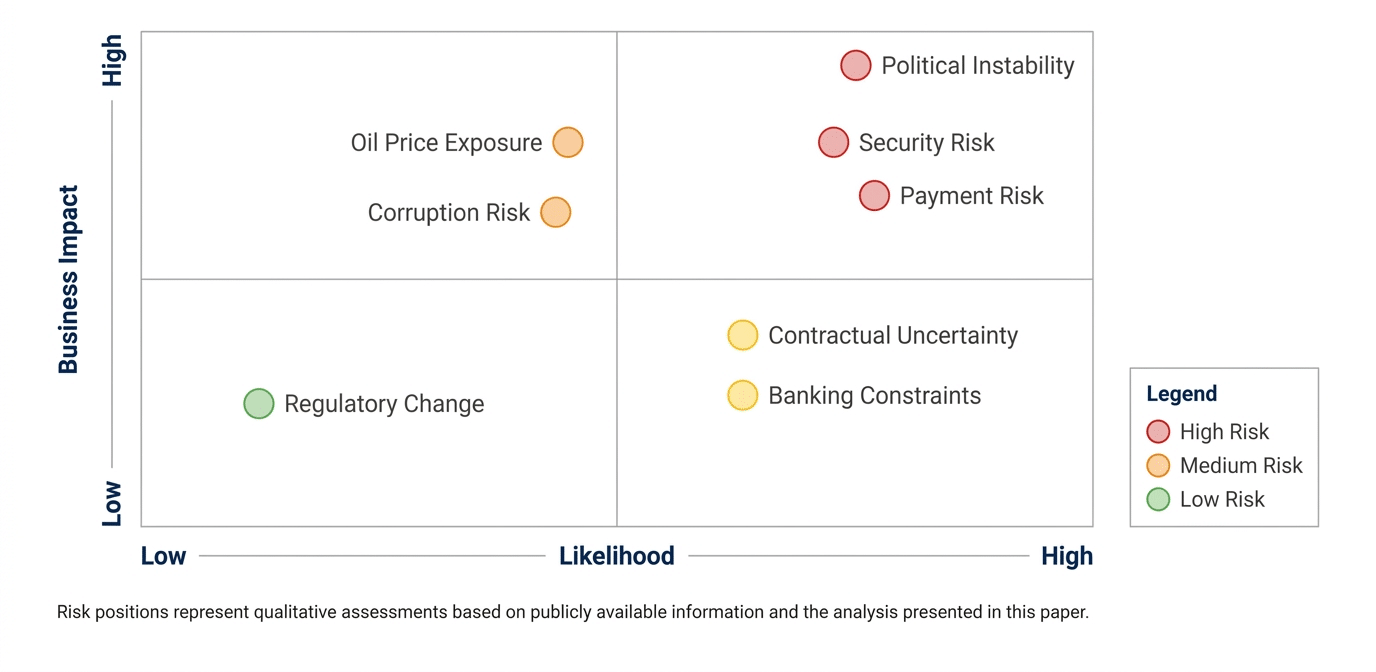
Figure 3. Iraq Infrastructure investment Risk Matrix 2026
Source: Figure developed by the author using generative AI as a visualisation tool. Content, selection, and editorial review by the author.
2. Contractual Instability
The cancellation of the Baghdad Airport PPP is a reminder that contracts in Iraq are not always honoured. The previous government worked with the IFC for two years to develop the PPP framework. The contract was awarded in October 2025. It was cancelled in June 2026.²⁴
The Al-Zaidi government has made clear that it will scrutinise contracts from the previous administration. The criteria for review are not always transparent. This creates a risk that even properly awarded contracts may be terminated.
3 Banking System Constraints
The restrictions on USD transactions affecting 28 banks and 70 exchange companies are not temporary. They reflect a systemic problem with money laundering and sanctions compliance that has drawn sustained US Treasury attention.²⁵
The CBI has announced that it has completed measures for the gradual reintegration of some restricted banks,²⁶ but the underlying issues remain. The US Treasury’s leverage over Iraq’s banking system is substantial and will not diminish quickly.
4 Political Continuity
Government formation in Iraq is a prolonged, opaque process. The current government was confirmed in May 2026 but still has an incomplete cabinet. The ethno-sectarian quota system distributes ministries among competing parties, which structurally works against coordinated reform.²⁷
The current government’s orientation toward the US and reform could be reversed in the next electoral cycle. The next parliamentary elections are currently scheduled for 2029, but early elections are possible.
Conclusion
Iraq should not be viewed as a conventional emerging market. It is a market where exceptional opportunity exists alongside equally exceptional execution risk. The risks are real, the operating environment is complex, and the political trajectory is uncertain. But the opportunities are also real, and they are concentrated in sectors where international infrastructure companies have distinctive capabilities.
The Al-Zaidi government is attempting to write new rules for Iraq’s investment environment. The US is the preferred partner, anti-corruption is being enforced with new vigour, and a selective infrastructure pipeline is being built with multilateral backing. Whether the government succeeds depends on factors beyond its control—the trajectory of oil prices, the stability of the region, and the willingness of the international community to engage.
For companies that can manage the risks, Iraq offers something increasingly rare in the global infrastructure market: a large-scale, multi-sector opportunity with strategic significance that goes beyond the balance sheet. Success requires technical capability, political understanding, and contractual sophistication. Generic emerging-market expertise is not sufficient.
References
- Government of Iraq. Prime Minister’s Media Office. “PM Al-Zaidi Departs for Official Visit to the United States.” July 13, 2026.
- Government of Iraq. Prime Minister’s Media Office. Statements on Washington visit agenda. July 2026.
- Ministry of Oil, Republic of Iraq. “TotalEnergies GGIP Project Structure and Timeline.” March 2026.
- MEED. “Iraq risks defaulting on payments for $10bn oil project.” May 20, 2026.
- TotalEnergies. “Iraq: TotalEnergies and Partners Launch Gas Growth Integrated Project.” Press release. July 2025.
- Kurdistan24. “Iraq Scraps Billion-Dollar Rail and Airport Projects.” June 14, 2026.
- The National. “Iraqi PM cancels $764m Baghdad airport redevelopment over corruption concerns.” June 14, 2026.
- Zawya. “Iraq scraps Baghdad airport, development rail projects.” June 14, 2026.
- OCCRP. “World Bank Arm Stands by Iraq Mission Even After Massive Airport Contract Collapses.” June 16, 2026.
- World Bank. “New US$900 million World Bank Financing to Improve Iraq’s Road Connectivity and Support Job Creation.” June 5, 2026.
- Germany Trade & Invest (GTAI). “Weltbank treibt Milliarden-Bahnprojekt in Irak voran.” July 13, 2026.
- Central Bank of Iraq. “Lists of banks restricted from participating in the foreign exchange window.” February 2026.
- Central Bank of Iraq. “Foreign Currency Sale Window: Announcement.” February 2026.
- Integrity Commission of Iraq. “Anti-corruption scheme announcement.” May 2026.
- Zawya. “Iraq’s Integrity Commission says it stopped embezzlement of $1.1bn.” June 2026.
- Transparency International. Corruption Perceptions Index 2025. January 2026.
- Ministry of Oil, Republic of Iraq. Statements on production capacity targets. June 2026.
- Zawya. “Iraq to connect Phase 2 of 1.2GW Shams Basra solar project in Q3 2026.” May 12, 2026.
- World Bank. “Iraq Transport Economic Corridors (ITREC) Project.” Project P510293. June 2026.
- World Bank. “Iraq Railways Extension and Modernization Project (IREM).” June 2025.
- GCC Interconnection Authority. “GCC–Iraq Electricity Interconnection Project.” April 2026.
- Vortexa. “Iraq’s Export Crisis: Hormuz and Pipeline Uncertainty.” April 2026.
- Malay Mail. “Iraq projects oil production to return to pre-war levels within two months.” June 20, 2026.
- The National. “IFC responds to Iraq airport contract cancellation.” June 2026.
- US Department of the Treasury. Statement on Iraqi banking sector compliance. February 2026.
- Central Bank of Iraq. “Gradual Reintegration of Restricted Banks.” June 2026.
- International Crisis Group. “Iraq Forms New Government amid Regional Turmoil.” May 2026.